
An extraordinary incident on the railway to Ladysmith – 15 November 1899
Few incidents of the Anglo-Boer War have captured the public imagination quite like the capture of Winston Churchill during the ambush of a British armoured train near Frere on 15 November 1899.
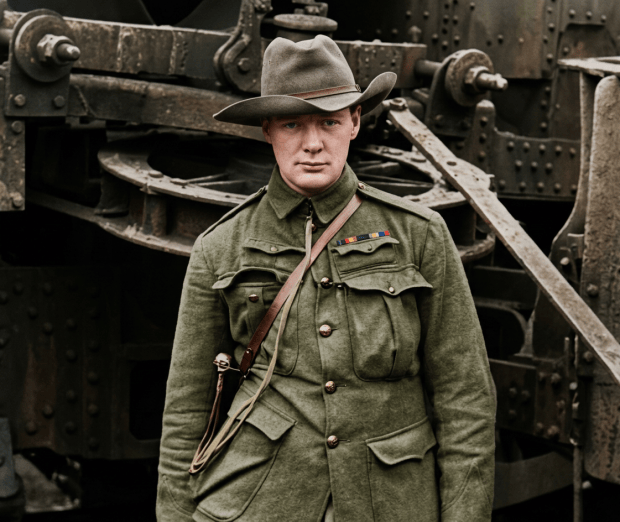
Today, this relatively quiet stretch of the old railway corridor provides an opportunity to explore an extraordinary episode in the early stages of the Natal campaign. It was here that a young Winston Churchill, working as a war correspondent for the Morning Post, found himself caught up in a military reconnaissance mission that ended in disaster for the British and changed the course of his own life.
When I visit the site, I like to start by putting the incident into its wider military context. By November 1899, Ladysmith had been surrounded by Boer forces, and the British army was attempting to establish and protect its position south of the Thukela River. The railway running northwards from Durban, through Pietermaritzburg and Estcourt towards Colenso, was the British army’s principal supply and communication route. Control of this railway was critical to the campaign.
The armoured train ambush
On 15 November 1899, an armoured train commanded by Captain Aylmer Haldane of the Gordon Highlanders was sent north from Frere on a reconnaissance mission towards Chieveley. It carried British infantry, naval personnel, a small naval gun and railway staff. Among those on board was the young Winston Churchill.
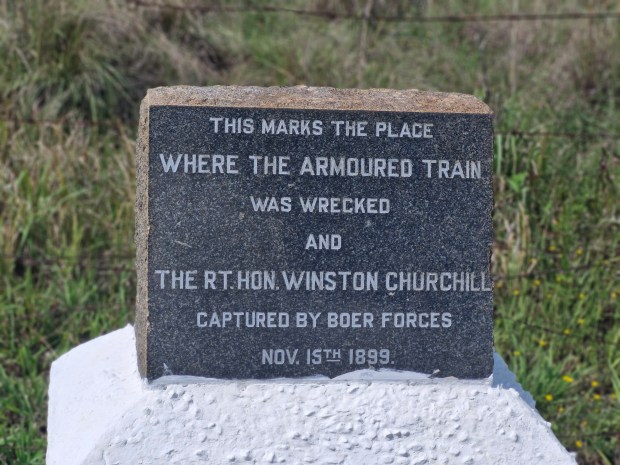
The purpose of the mission was to establish the whereabouts and strength of Boer forces operating in the area. However, the train proceeded beyond the authorised forward limit at Frere and encountered Boer forces.
As the train attempted to return, it ran into a railway obstruction. Several trucks derailed, bringing the train to a halt under Boer rifle fire from the surrounding high ground. The locomotive was used to push some of the wreckage clear, but the train had become separated, leaving men exposed to enemy fire.
Churchill played an active role in helping to clear the line and assist wounded men. The locomotive and tender eventually managed to escape with a number of personnel aboard. Churchill, however, returned towards the men who had been left behind and was captured by Boer troops.
The incident resulted in British casualties and prisoners, but it was Churchill’s capture that would subsequently attract international attention. His own account of the incident, together with the conflicting descriptions of exactly who captured him, has helped make this one of the more intriguing stories of the Natal campaign.
Churchill’s capture and escape
Churchill was taken prisoner and eventually transported to Pretoria, where he was held at the Staatsmodelskool.
On 12 December 1899, he made a daring escape by climbing over a wall of the building. After travelling through the Transvaal and into Portuguese East Africa, he eventually reached the coast and secured passage aboard a steamer to Durban.
He arrived in Durban on 23 December 1899, where he received a remarkable public reception and addressed a crowd from the steps of the Durban Town Hall.
His capture and escape made him a household name in Britain and helped establish the public profile of the man who would later become one of the most significant political and military leaders of the twentieth century.
Standing at the capture site, I find it particularly interesting to consider how an event that was relatively small in military terms became such an important episode in the life of a future British Prime Minister.
From Frere to Willow Grange: The wider Natal campaign
The armoured train incident was not an isolated event. It occurred during a particularly uncertain period for the British forces in Natal.
Following the investment of Ladysmith, Boer forces moved southwards, threatening Estcourt and the British railway communications. The British were concerned that the Boer advance might isolate their forward positions and prevent reinforcements from reaching them.
The next significant engagement in this phase of the campaign was the Battle of Willow Grange on 23 November 1899, fought south of Estcourt.
British forces under Major-General Hildyard moved against Boer positions around Beacon Hill, Klobber’s Kop and Brynbella Hill. The fighting took place in exceptionally difficult weather conditions, including a violent hailstorm. Although the engagement did not result in a decisive tactical victory, the Boer advance towards the south was checked and the immediate threat to Estcourt diminished.
The events at Frere, the Battle of Willow Grange and the subsequent British advance towards Colenso are all connected by the struggle for control of the railway, the approaches to the Thukela and the route to Ladysmith.
Experience the Winston Churchill Capture Site
During my guided visit, I use the site to explain the circumstances surrounding the armoured train reconnaissance, the geography of the railway corridor and the Boer tactics that brought the train to a standstill.
Rather than simply recounting the story of Churchill’s capture, I explore the military significance of the incident and how it fits into the wider campaign in Natal.
It is an opportunity to look beyond the famous personality and understand the experiences of the soldiers, sailors and railway personnel who found themselves caught in the ambush.
For those interested in the Anglo-Boer War, the site offers a fascinating insight into the early stages of the campaign that would ultimately lead to the relief of Ladysmith.
Extend Your Battlefield Experience
The Natal Campaign: Churchill, Colenso, Spioenkop and Ladysmith
The Winston Churchill Capture Site can be included as part of a much wider Anglo-Boer War battlefield excursion, exploring the principal engagements and events associated with the British attempts to relieve Ladysmith during the summer of 1899–1900.
I can develop a guided excursion that brings together several important historical locations, following the campaign as it unfolded.
1. Winston Churchill Capture Site – Frere
Begin with the dramatic story of the armoured train ambush, Churchill’s capture and the importance of the railway communications between Estcourt and the British forward positions.
2. Battle of Colenso – 15 December 1899
Continue northwards to the Colenso battlefield, where General Sir Redvers Buller’s first major attempt to force a crossing of the Thukela ended in a disastrous British defeat. We explore the river crossings, the Boer defensive positions and the events surrounding the loss of the British field guns.
3. Battle of Spioenkop – 24 January 1900
Explore the battlefield where British forces attempted to outflank the Boer positions along the Thukela. From the summit and surrounding observation points, I explain the difficult fighting on the plateau, the command decisions and the extraordinary casualties suffered by both sides.
4. Siege of Ladysmith – Wagon Hill, Platrand and Caesar’s Camp
Complete the experience with a visit to the Siege of Ladysmith battlefield sites. Depending on the time available and your interests, this can include a guided hike exploring Wagon Hill, Platrand and Caesar’s Camp, together with a visit to the Siege Museum.
Here we examine the conditions experienced by the besieged British garrison, the Boer investment of the town and the desperate fighting during the siege, including the major Boer assault of 6 January 1900.
A Battlefield Experience That Brings the Campaign Together
What makes this excursion particularly rewarding is the opportunity to follow the campaign geographically and chronologically.
From the armoured train ambush at Frere, through the British defeat at Colenso, the desperate fighting at Spioenkop and finally the prolonged siege of Ladysmith, visitors gain a much deeper understanding of the military challenges faced by both British and Boer forces.
Rather than visiting isolated battlefield monuments, we explore the landscape, examine the military decisions and consider how the geography of the Thukela Valley influenced the course of the war.
I offer these excursions as personally guided battlefield experiences, drawing on historical research, military maps, the terrain and the stories of the men who fought here. My aim is to make the history accessible and meaningful, whether you are a dedicated military history enthusiast or simply interested in discovering more about one of the most important campaigns of the Anglo-Boer War.
The Winston Churchill Capture Site can be visited as a shorter standalone excursion or incorporated into a full-day or extended battlefield experience covering Frere, Colenso, Spioenkop and Ladysmith.
Join me in exploring the battlefields of the Natal campaign and discovering the stories behind the events that shaped the history of South Africa. james@cathkinmanagement.com


