
Guided Battlefield Experience in KwaZulu-Natal
Introduction
The Spion Kop Battlefield or Spioenkop is one of the most dramatic and historically significant sites of the Anglo-Boer War (1899–1902). The battle fought here on 24 January 1900 formed part of the British attempt to relieve the besieged town of Ladysmith and resulted in one of the most intense and tragic engagements of the war.
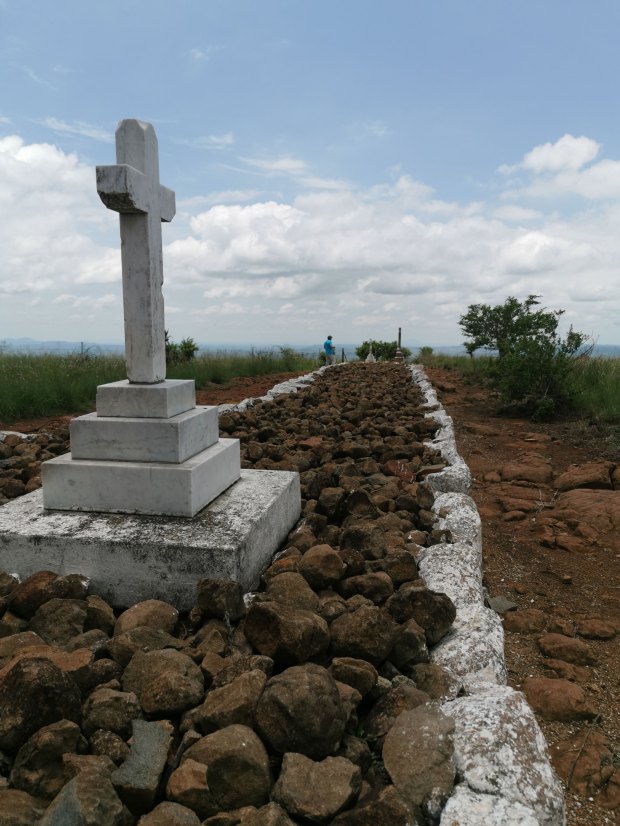
Today the summit of Spion Kop (Spioenkop) stands as a powerful place of remembrance. From its crest there are sweeping views across the Tugela River valley and the distant Drakensberg escarpment, creating one of the most spectacular battlefield landscapes in South Africa.
This guided walking tour is led by James Seymour, a registered adventure, culture and nature guide. The excursion combines detailed battlefield interpretation with insights into the wider history, geology and heritage of the Drakensberg region.
Orientation at the Interpretative Boards
The tour begins at the interpretative boards at the Spion Kop Battlefield site, where visitors are introduced to the events that led to the battle. Here the guide explains the strategic importance of the hill during the Tugela campaign and outlines the plans of the British and Boer commanders.
During this orientation the wider historical context of the battle is also explored. Three figures who would later shape twentieth-century history were associated with the campaign at Spion Kop:
- Winston Churchill, then working as a young war correspondent.
- General Louis Botha, one of the Boer commanders who later became the first Prime Minister of the Union of South Africa.
- Mohandas Gandhi, who organised and served with the Indian Ambulance Corps, assisting in the evacuation of wounded soldiers during the campaign.
Although Gandhi’s exact position during the battle is debated, it is widely accepted that he was in the vicinity assisting the stretcher-bearers.
The Ascent to the Ridge
From the interpretative area the tour proceeds on foot along the route followed by the British troops during their night advance on the hill.
Participants walk towards the ridge from which the British force climbed to the summit, gaining a clear sense of the terrain that confronted the soldiers in darkness and confusion during the early hours of the battle. The guide explains how the attacking troops mistakenly occupied the wrong position on the summit and how Boer forces, positioned on surrounding heights, were able to direct devastating fire onto the exposed ridge.
The Acre of Massacre
The walk continues to the area historically known as the “Acre of Massacre.” This sombre site marks one of the most intense points of fighting during the battle.
Memorials here commemorate the regiments that suffered heavy losses on the summit, including the Lancashire Regiment, whose soldiers held their position under relentless fire. The guide recounts the events that unfolded on this exposed hilltop and the extraordinary endurance of those who fought there.
Memorials of Courage and Service
Several important memorials are located on the summit of Spion Kop and form part of the walking tour.
One of these is the Burger Memorial, which honours the Boer commandos who fought in the battle. Nearby stands the memorial to the Indian Stretcher Bearers and African Scouts, recognising the vital role played by those who carried wounded soldiers from the battlefield.
The monument commemorates the remarkable humanitarian service provided by members of the Indian Ambulance Corps, organised by Gandhi, whose volunteers worked under extremely dangerous conditions to evacuate the injured from the battlefield.
Views of the Drakensberg and the Tugela Valley
Spion Kop is renowned not only for its historical significance but also for its extraordinary landscape. From the summit there are magnificent panoramic views across the Tugela River valley to the towering escarpment of the Drakensberg Mountains.
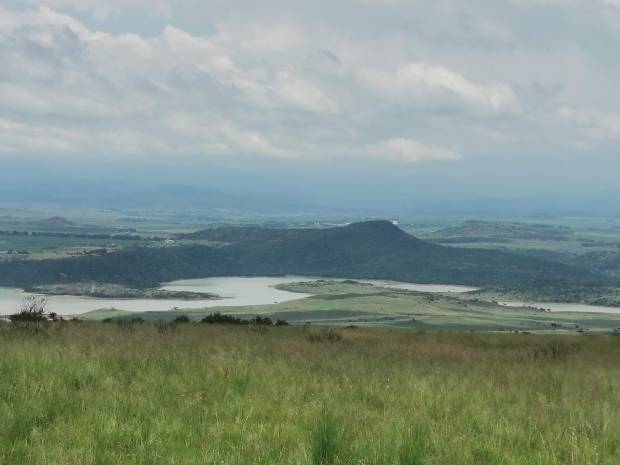
During the walk, James Seymour provides an overview of the geology and natural history of the Drakensberg, explaining how the ancient sandstone and basalt formations created this remarkable landscape. These geological forces shaped the terrain that influenced both the battle itself and the wider heritage of the region.
A Powerful Battlefield Experience
A visit to the Spion Kop Battlefield offers far more than a history lesson. The quiet summit, marked by memorials and framed by distant mountains, provides a place for reflection on one of the most poignant episodes of the Anglo-Boer War.
This guided walking tour brings together battlefield history, cultural heritage and the dramatic scenery of northern KwaZulu-Natal, creating a memorable experience for visitors interested in South African history, military heritage and the landscapes of the Drakensberg.
Home |
 Drakensberg Walking Excursions